

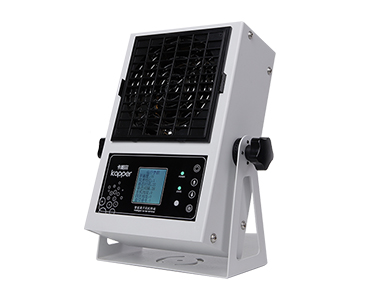
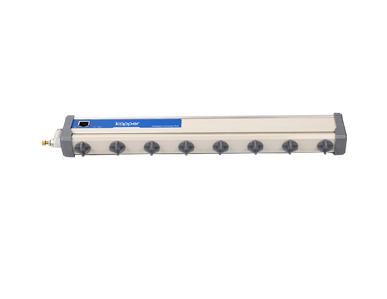
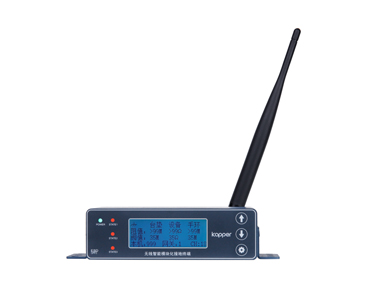
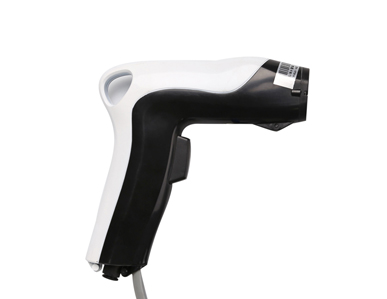
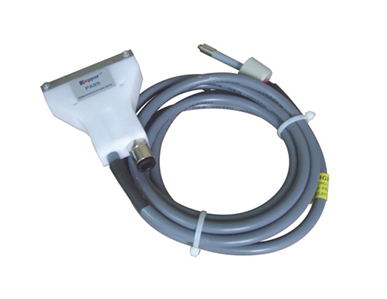
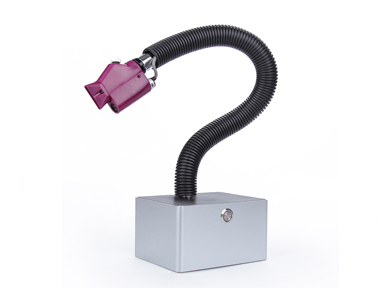
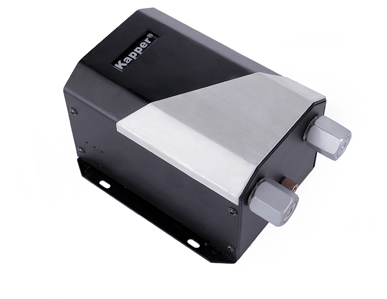
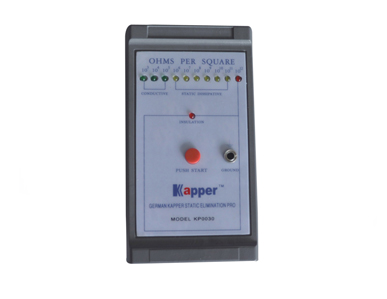
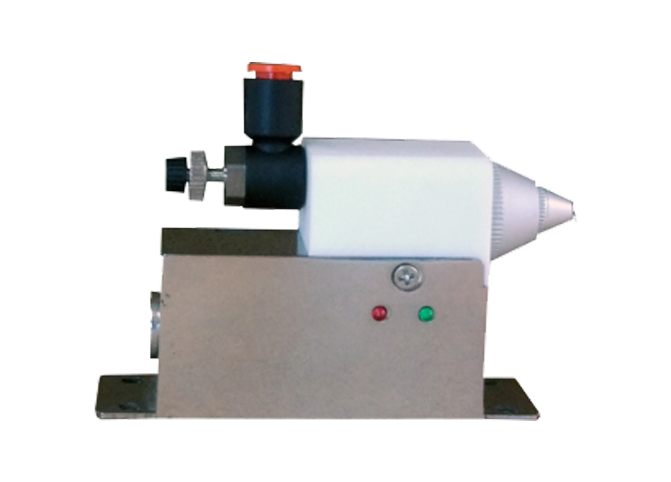
KP2001A high frequency ionic wind nozzle
Model: KP2001A
Application areas
-

Medical devices
-

Semiconductor and electronic assembly
Product Overview
KP2001A High frequency ionic wind nozzle It is a fixed electrostatic removal device developed and produced by Kapal Company to eliminate static electricity and dust on the surface of objects. It requires compressed air to be used.
KP2001A High frequency ionic wind nozzle Using today's new international technology, small high-voltage transformers are used to convert the input DC into high-frequency low-voltage alternating current, without external high-voltage components and high-voltage wiring, which can easily add different components and be applied to different occasions. KP2001A High frequency ionic wind nozzle A large amount of air flow with positive and negative charges can be generated, which is blown out at high speed by compressed gas, which can neutralize the charge carried on the object. When the surface of an object is negatively charged, it will attract positive charges in the air flow. When the surface of an object is positively charged, it will attract negative charges in the air flow, thereby neutralizing the static electricity on the surface of the object to achieve the purpose of eliminating static electricity.
KP2001A High frequency ionic wind nozzle Widely used in mechanical equipment supporting, medical device manufacturing, electronic assembly, semiconductor manufacturing and other industries.
Features
* The ions produced are high in density and fast in removing static electricity. .
* The ionic gas flow covers a large area.
* Small size, light weight and easy to install.
* It has indicator light alarm function.
* The air nozzle has direct front air outlet type with pipe, side air outlet type with bent pipe, straight front air outlet type with pipe, and straight air outlet type without pipe.
* The wind nozzle has good grounding protection function.
Technical parameters
Operating voltage | DC24V |
Air source connector | Ф8mm (customized according to customer requirements) |
Ion equilibrium | ≤|±15V| (300mm away from the front test center of the wind tip) |
Discharge time | ≤1S (300mm from the test center in front of the wind nozzle) |
Use media | Clean compressed air |
Operating temperature | 0℃-50℃ |
Working humidity | <75% |
High voltage wire length | 1.2M (customized according to customer requirements) |
Compressed air pressure | 0.3-0.8Mpa |
Airflow speed | 3-10m/S |
Noise | ≤65dB |
Ozone concentration | ≤ 0.03 ppm (150mm in front of the air outlet) |
External dimensions | 95mm(L)*57mm(W)*28mm(H) |
Heavy |
Test results
Test conditions | ||
Humidity: ≤60% Test voltage: 1KV-100V Ambient temperature: 22℃ | ||
distance | 300mm | |
Neutralization time | just | 0.7s |
burden | 0.8s | |
Residual voltage | ≤±15V | |
* The test results of the test instrument using ME268A electrostatic comprehensive tester shall prevail.
* Testing is based on IEC-61340-5-1 A·6.
* The data tested will vary depending on the temperature and humidity changes around it.