




Static hazards:
In gravure printing, accidental ignition problems can cause serious harm to production. This type of ignition problem is caused by the discharge of static electricity on the surface of the coil to surrounding grounding components (such as electric sparks), thereby igniting the combustible solvent in the ink tank. This usually happens when the material enters and leaves the corner of the printing bag (see the marked area along the way). Especially when the printing ink is gold, silver or black, which are more or less conductive inks, it is more likely to cause ignition. Conductivity makes electric sparks more likely to occur.
Solution:
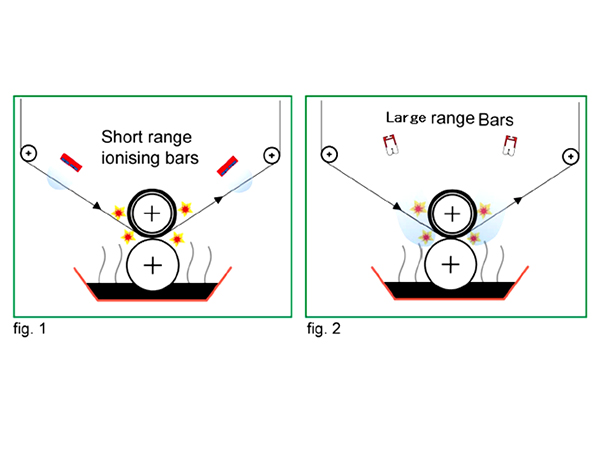
The typical installation of a short-acting ion rod is shown in Figure 1. Although it is better than nothing, due to its short acting distance and its stick is close to the material, there are the following shortcomings:
1. It is impossible to cover the entire area where static electricity problems need to be solved.
2. The stick will be contaminated soon.
3. Smaller coverage areas lead to short residence time of the coil in the ionic area, resulting in poor electrostatic neutralization effects.
4. The electrostatic elimination rod may be easily damaged due to the fracture of the coil material.
The gas source ion rod can be installed in an area away from the coil (as shown in Figure 2), and the effective working distance can reach 150mm. This will completely eliminate static electricity in the electrostatic control area (as shown in the figure), and also reduce the probability of ion rods being contaminated and damaged, thereby solving the above problems.